Bedding · A practical guide
Down Comforters Decoded: Fill Power, Construction, and Warmth
A down comforter’s promise is simple: warmth without unnecessary weight. The details behind that promise are less simple. Fill power, fill amount, chamber design, and shell fabric each shape how a comforter feels—and none tells the whole story alone.
Published October 21, 2026
Down has a particular talent for making a bed feel both substantial and light. The soft clusters beneath a bird’s feathers trap air, creating insulation without the dense, packed sensation associated with some heavier fills. But “down comforter” is not a single specification. Two comforters can use similar fill and still differ noticeably in loft, warmth, weight, and how evenly they cover the sleeper.
That is why shopping by one number can be misleading. Fill power measures the lofting capacity of down under a standardized test; it does not state how much down is inside a comforter. Construction influences whether the fill stays evenly spread, and the shell determines how air and moisture move through the finished insert. To understand bedding warmth, it helps to read those details together.
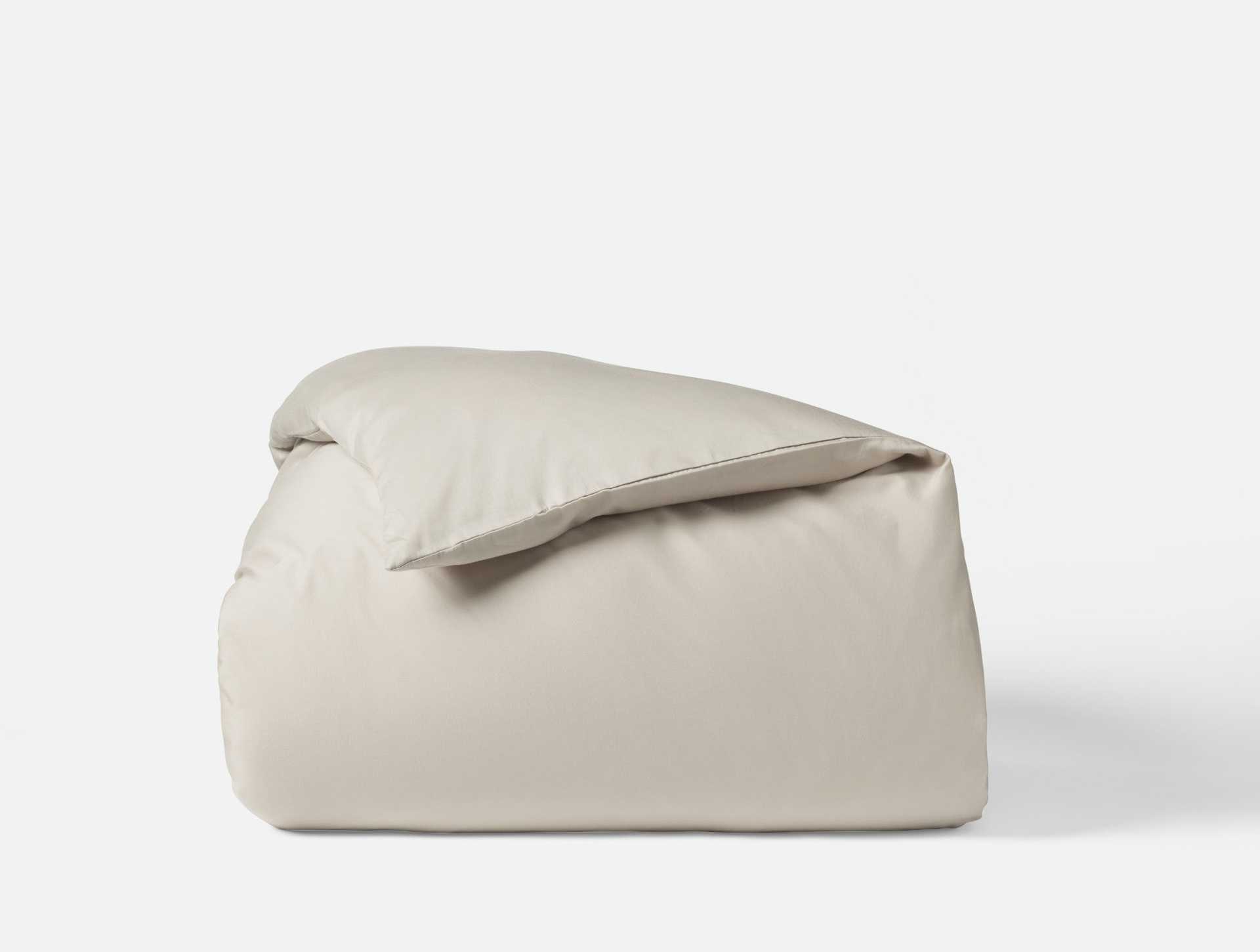
Consider the Casper Down Duvet as a concrete example. Its listed construction includes ethically sourced down, a 100% cotton shell, sewn-in chambers, and eight loops for securing it inside a cover. Those details do not, by themselves, establish a particular warmth rating. They do illustrate how fill, enclosure, and attachment points work together in an everyday comforter.
What fill power measures—and what it leaves out
Fill power is a measure of loft: how much space a given weight of down occupies under specified testing conditions. It is commonly expressed as a number, such as 600 or 800. In broad terms, higher fill power means the down can form more volume per unit of weight. That potential can be used to make a comforter that feels lighter for a given level of insulation, or to create greater loft without simply adding the same amount of lower-loft fill.
The key word is potential. Fill power describes the down’s capacity to loft; it does not tell you the total quantity used in a particular comforter. A high fill-power comforter with a modest amount of down may not be as warm as a lower fill-power comforter containing substantially more fill. Likewise, the finished product’s warmth depends on its dimensions, construction, distribution of fill, and the conditions in which it is used.
Think of fill power as one part of a recipe, not a warmth score. It can help compare the quality or lofting characteristics of down when the test method and product details are clearly stated. It cannot replace information about fill weight, intended season, or the comforter’s overall design.
- Fill power: the lofting capacity of a given weight of down.
- Fill weight: the amount of down used in the comforter.
- Finished warmth: the combined result of fill, dimensions, construction, shell, and sleep conditions.
When specifications omit fill weight or a clear warmth description, it is difficult to make a precise comparison. A responsible guide should say so rather than infer performance from a single headline number. Labels and ratings may also use different conventions, so comparisons are most useful when products provide consistent, transparent information.
Why fill amount matters alongside loft
Fill amount affects how much insulating material is present across the comforter. More fill can contribute to greater warmth, but it may also add weight and alter the drape. The relationship is not a simple “more is always better” equation: a sleeper in a warm room may find a very lofty, heavily filled duvet uncomfortable, while someone in a cold bedroom may need more insulation than a lightweight design can provide.
Comfort is personal, and the room is part of the equation. A well-insulated home, a cool climate, the temperature setting at night, a mattress that retains heat, and the sleeper’s own preferences all change what “warm enough” means. Couples sharing a bed may have different thermal needs, too. A comforter that feels ideal to one person can feel stuffy to another.
Instead of treating a specification as a guarantee, use it to ask better questions. Is the comforter designed for summer, winter, or year-round use? Does the maker state a fill weight or a warmth category? Is the item intended to be used alone, or layered with a blanket? Do the care instructions allow regular washing, or does the comforter require airing and spot cleaning? These practical answers can matter as much as the loft figure.
The quiet importance of chamber design
Down is light and mobile. Without a way to keep it distributed, fill can migrate toward the edges or gather in clumps, leaving thin areas and uneven warmth. Comforter construction addresses that problem by shaping the spaces in which the fill sits.
In a sewn-through design, the top and bottom layers are stitched together at intervals. The stitching creates compartments, but it can also form narrow lines where there is less insulation. In a baffle-box design, internal fabric walls separate the top and bottom layers, creating three-dimensional chambers that give down room to loft. The two approaches have different trade-offs in cost, complexity, and the way the finished comforter feels.
Terms used in product descriptions are not always applied uniformly, so it is useful to look for an explanation of the actual construction rather than rely on a label alone. Chamber size, stitching pattern, and workmanship can influence how evenly down is distributed. A complicated design is not automatically the right one for every sleeper, but clear construction details make it easier to understand what a comforter is designed to do.
The Casper example is described as having sewn-in chambers intended to keep the down evenly distributed and maintain consistent loft. That is a practical design goal: a more stable fill arrangement can reduce the likelihood of noticeable thin spots. Construction cannot compensate for unsuitable warmth or poor care, but it can contribute to a smoother, more predictable sleep surface.
Loops and duvet covers: small details, daily difference
A comforter and its cover can shift against one another as a person turns during the night. Corner loops, ties, or other attachment points help hold the insert in position. They are easy to overlook on a specification sheet, yet their value becomes clear when a duvet cover twists or gathers and has to be straightened in the morning.
The Casper Down Duvet lists eight loops to help align the insert inside its cover. The number is useful only if the cover has matching ties or a compatible way to secure it. Before combining an insert and cover, check that the attachment points correspond and that the cover is the right size. A loose, oversized cover may permit shifting; one that is too small can compress the comforter and limit its loft.
Internal ties also appear on some duvet covers, while snaps, buttons, or zippers close the opening. These are features of the cover rather than the down fill, but the whole bedding system works together. For instance, a cotton shell on the comforter does not determine the fabric of the cover placed over it. The cover’s weave and fiber can change the surface feel, ease of laundering, and perception of airflow.
What the shell fabric contributes
The shell is the fabric enclosure that holds the fill. It has to contain down while remaining comfortable against the body and durable through ordinary use. Cotton is a common choice because it is familiar, breathable, and available in different weaves and weights. A tightly woven shell can help reduce the escape of fine fill through the fabric, while the weave and finishing influence the hand and drape.
In the Casper example, the shell is listed as 100% cotton. That tells us its fiber content, but not every detail of its performance. Thread count, weave, fabric weight, finishing, and the specific construction all affect how the shell feels. Thread count alone is not a complete quality measure; it should be read alongside the material and weave rather than treated as a universal ranking.
Airflow is also a system-level property. A breathable shell may support comfort, but it cannot guarantee that every sleeper will stay cool. The down’s amount and distribution, the cover, room temperature, sleepwear, and personal heat sensitivity also matter. Claims about temperature regulation should therefore be understood as descriptions of materials and design—not promises of a particular body temperature.
Warmth is a bedroom equation
Choosing a comforter begins with the conditions of the room, not just the season printed on a label. A home with steady heating may call for a lighter insert in winter than a drafty bedroom does. A warm sleeper may prefer a thinner comforter even in cold weather, while a person who tends to feel chilly may want more insulation. Climate, bedding layers, and individual comfort are all part of the decision.
“All-season” is similarly a useful orientation, not a precise promise. It generally indicates a design intended for use across a range of conditions, but homes and preferences vary widely. If a room changes dramatically between summer and winter, separate lighter and warmer inserts—or a flexible layering approach—may be more comfortable than expecting one comforter to suit every night.
For people sharing a bed, different blankets or layers on each side can sometimes address mismatched preferences without forcing a compromise on the entire sleep surface. A breathable sheet, a light blanket, and a duvet can be adjusted independently. That simple strategy may be more effective than choosing a single exceptionally warm comforter to solve every seasonal problem.
A useful checklist for comparing down comforters
Specifications are most helpful when they answer practical questions. Before deciding, consider the following points:
- Read fill power and fill weight together. One describes lofting capacity; the other describes how much fill is used.
- Look for a clear warmth description. Check whether the comforter is positioned for warm weather, cold weather, or broader use, and treat that description as a guide rather than a guarantee.
- Understand the construction. See whether the design uses sewn-through compartments, baffles, or another method to limit fill migration.
- Check the attachment system. Loops on the insert need to work with ties or other fasteners in the duvet cover.
- Examine the shell details. Fiber content is a starting point; weave, weight, and care instructions add context.
- Confirm dimensions. Match the comforter to the cover and mattress arrangement, allowing for the drape you prefer.
- Consider care before purchase. A comforter that needs specific handling should fit the time and facilities you can realistically provide.
- Review sourcing and certifications carefully. Look for specific, verifiable information, and distinguish a stated certification from a general marketing claim.
This checklist is not a demand for the most expensive or technically elaborate option. It is a way to identify which details matter for a particular bedroom. A straightforward comforter with transparent specifications may be a better match than a more complex one whose warmth and care requirements remain unclear.
Care, longevity, and everyday use
Down comforters benefit from routine airing and protection from unnecessary wear. A duvet cover helps keep the shell clean and reduces how often the insert needs washing. Follow the manufacturer’s care label: cleaning methods vary, and an instruction appropriate for one comforter may damage another. If home laundering is permitted, the machine must be large enough for the comforter to move freely, and thorough drying is essential to prevent damp fill from clumping.
Between washes, airing the comforter can help it feel fresh. Gentle shaking may restore some loft, but vigorous handling can stress seams. If fill shifts or a seam opens, address the problem promptly rather than allowing the damage to spread. Storage should be dry and breathable; compressing down for long periods can interfere with loft and leave the comforter less inviting when it is brought back into use.
Down is not the only suitable fill. Some sleepers choose alternatives for personal, ethical, allergy-related, or care reasons. The right bedding is the one that fits the user’s needs and can be maintained appropriately. No natural fiber or fill guarantees freedom from allergies, and people with specific sensitivities may wish to seek advice from a qualified health professional rather than rely on broad product claims.
Reading the Casper example without overreading it
The Casper Down Duvet provides a useful illustration of how product details combine: ethically sourced down, a cotton shell, sewn-in chambers, and eight loops for cover alignment. These specifications point to practical intentions—containment, even distribution, and a more secure fit inside a duvet cover. They do not provide a fill-power figure or fill weight in the information presented here, so they are not enough to compare its loft or precise warmth with another model.
That distinction is central to good bedding research. A named feature can explain construction, but it should not be stretched into a performance claim the available information cannot support. If warmth is the priority, seek the missing specifications from the manufacturer and consider the room and sleeper as well. The most useful comparison is not a contest between isolated numbers; it is an assessment of whether the whole design suits the way someone sleeps.
The bottom line
Down comforters are a study in balance: loft against weight, warmth against airflow, softness against durability. Fill power helps explain how much volume down can create for its weight, but fill amount determines how much insulation is present. Chamber construction helps keep that fill where it belongs, loops can connect insert and cover, and shell fabric shapes the feel of the enclosure.
For a thoughtful choice, begin with the temperature of the bedroom and the sleeper’s preferences. Then compare fill power with fill weight, inspect construction details, confirm the cover attachment system, and read the care instructions. A comforter’s best feature may not be the biggest number on its label. It may be the quiet fact that the bed stays evenly warm, the insert stays in place, and the room feels comfortable from one season to the next.