Bedding · Cotton · Sleep comfort
Percale or Sateen? How Naturepedic Cotton Sheets Shape Bedtime Comfort
Cotton is only the beginning of a sheet’s story. The way its yarns cross, the weight of the cloth, and the finishing applied after weaving can turn the same familiar fiber into two very different experiences: percale’s crisp, airy touch or sateen’s smooth, softly draping surface.
Published November 6, 2026
At bedtime, a sheet is more than a layer between the sleeper and the mattress. It is the first fabric the skin meets, a small but constant influence on how a bed feels through a long night. Some people want the cool, clean sensation of a freshly made hotel bed. Others prefer a softer surface that seems to settle around the body. The difference may come down not to a different cotton plant, but to a different weave.
Naturepedic’s organic cotton bedding offers a useful way to think about that distinction. Its organic cotton sateen duvet cover, for example, is described as smooth and softly lustrous, with a fluid drape. Percale, by contrast, is widely associated with a crisp, matte, breathable feel. These are tendencies rather than guarantees: yarn quality, fabric weight, construction, finishing, room temperature, and personal preference all shape the experience.
The choice between percale and sateen is not a contest with one universal winner. It is a decision about texture and the conditions in which you sleep. Understanding the basics can make it easier to choose sheets—and to care for them in a way that preserves their feel.
First, separate the fiber from the weave
Cotton is the fiber. Percale and sateen describe ways of arranging yarns in a fabric. That distinction matters because two products made from cotton may feel strikingly different, even when both use carefully selected yarns. Fiber properties influence strength, absorbency, and softness; weave influences the surface, drape, and the way air moves through the cloth.
In a basic plain weave—the construction commonly associated with percale—each horizontal yarn passes over one vertical yarn and then under the next. The repeated, balanced crossing creates a comparatively even surface. Percale is generally woven tightly enough to feel substantial, yet its simple structure often gives it a crisp, breathable character.
Sateen uses a different arrangement. In a typical sateen weave, yarns float over several other yarns before passing under one. Those longer floats expose more yarn surface on the face of the cloth. The result is often a smoother hand and a gentle sheen, with a drape that can feel more fluid than percale. The reverse side may look and feel different because the weave presents its structure differently on each face.
Neither weave changes cotton into a different fiber. Nor does a weave alone tell you everything about quality. Yarn length and strength, the density of the fabric, finishing, and construction all matter. A well-made sheet is a system of choices, not a single specification on a label.
Percale: crisp, matte, and open in feel
Percale’s appeal is its clarity of texture. It usually feels cool and crisp at first contact, with a matte appearance rather than sateen’s subtle glow. The surface can evoke a pressed cotton shirt: neat, light, and direct. For sleepers who dislike a clingy or slippery sensation, that crispness can be a welcome part of settling in.
The plain-weave structure is often associated with airflow and a lighter sensation on the bed. That makes percale a common choice for warm bedrooms, people who tend to sleep hot, and anyone who prefers bedding that feels fresh rather than enveloping. Still, no weave can guarantee a particular body temperature. A room’s climate, the duvet or blanket above the sheet, mattress materials, sleepwear, and individual physiology all contribute to warmth.
Percale may also feel firmer or slightly stiffer when new. Repeated laundering can soften cotton over time, though the result depends on the yarn, construction, and care routine. Some sleepers appreciate that gradual change; others prefer the softness of sateen from the outset. A new percale sheet should not be judged solely by the first few minutes out of its packaging, but it should still suit your basic preferences for texture.
Because its appearance is understated, percale works easily with a range of bedroom styles. Its clean, low-sheen finish can make a bed feel composed without drawing attention to the fabric itself. For people who value a cool-hand feel and a crisp, tidy look, it is a natural starting point.
Sateen: smooth, softly lustrous, and fluid
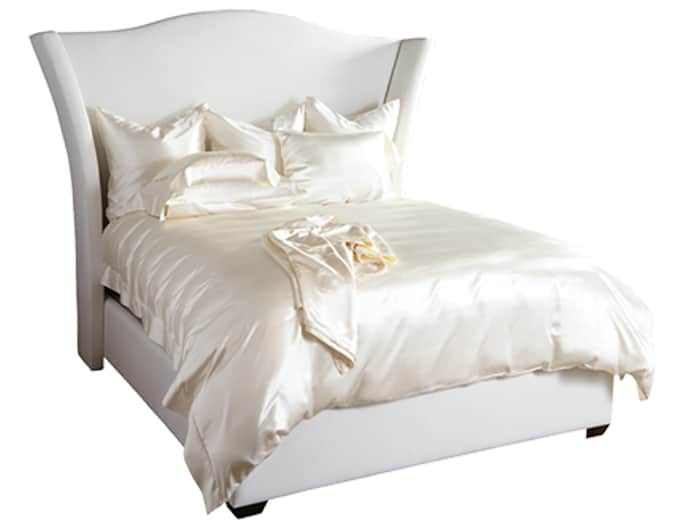
Sateen offers a different kind of comfort. Its longer yarn floats create a smoother face and a subtle sheen that catches light without necessarily appearing glossy. The fabric tends to drape more freely, creating a softer outline across a mattress and a more enveloping sensation against the skin.
Naturepedic’s organic cotton sateen bedding illustrates how finishing can contribute to that impression. Its organic cotton sateen duvet cover is described as having a soft, smooth surface and a gentle drape, with a four-over-one weaving technique. That construction is intended to give the fabric a fluid feel and may also help it resist wrinkles naturally. The product description identifies a 400-thread-count fabric and GOTS-certified organic cotton. Those details describe a particular duvet cover; they should not be treated as a universal formula for all sateen sheets.
Sateen is often chosen by sleepers who like a softer, more polished surface. It may feel warmer or more substantial than percale, in part because the weave and fabric weight can produce a closer, less airy sensation. This is a useful tendency, not a law: a lightweight sateen may feel different from a heavier one, and personal responses to temperature vary.
The smoothness can be especially appealing to anyone who dislikes the crispness of percale. But smooth does not automatically mean more durable, more breathable, or better suited to every sleeper. It means the fabric presents a different hand and appearance. The best test is whether you enjoy that sensation night after night.
How to think about organic cotton
Organic describes how cotton is grown and, depending on the certification, what requirements apply to processing and manufacturing. It does not describe the weave. Organic cotton can be made into percale, sateen, or other fabrics, so a preference for organic materials does not require choosing one texture over the other.
Certification language can help readers understand what has been assessed, but it is important to know what a specific label covers. GOTS—the Global Organic Textile Standard—sets criteria for organic fibers and includes requirements across processing and manufacturing. A certification applies to the certified product or supply chain within its scope; it is not a blanket claim that every item from a brand has the same certification. Checking the product’s own details is more useful than relying on a general impression.
Naturepedic describes its organic cotton sateen duvet cover as GOTS-certified and made from long-staple cotton. Long-staple cotton refers to fibers that are longer than short-staple varieties. Longer fibers can be spun into yarns with a smooth, strong character, although the finished fabric still depends on the whole construction and how it is made. Certification and fiber descriptions are helpful context, not substitutes for considering texture, care, and fit.
For sheets specifically, read the label for the exact item you are considering. A duvet cover and a sheet may share a fiber or weave while differing in weight, finish, seams, and care instructions. A product detail for one should not be assumed to describe another.
Thread count is only one clue
Thread count is often presented as a shorthand for sheet quality, but it measures the number of threads in a square inch of fabric under a particular counting method. It does not tell you whether the sheet will feel crisp or smooth, whether it will breathe comfortably in your bedroom, or how it will hold up over years of laundering.
Weave, yarn quality, fabric weight, and finishing are equally important to the final hand. In sateen, the surface structure helps create the characteristic smoothness; in percale, the balanced plain weave contributes to its crisp, matte feel. A higher thread count does not automatically make either weave more comfortable. Nor should one number be compared without context, since counting practices and yarn construction can differ.
Instead of treating a specification as a score, use it as one part of a broader description. Look for the fiber, weave, fabric weight if provided, finishing details, certification claims, care instructions, and measurements. When possible, feeling the fabric in person is a direct way to understand what words like “soft,” “crisp,” or “smooth” mean in practice.
Choosing for your sleep habits
The most useful question is not simply “Which is better?” It is “What do I want the bed to feel like?” Start with your preferences rather than the prestige of a term or a headline number.
- If you prefer a crisp surface: Percale is a logical first choice. Its matte finish and clean hand may suit those who like bedding to feel light and freshly made.
- If you prefer a smoother touch: Sateen may be more appealing. Its soft face and drape can make the bed feel more relaxed and enveloping.
- If your bedroom is warm: Consider percale as a possible match, especially if you enjoy a more open, airy sensation. Also look at the duvet, room ventilation, and fabric weight; sheets alone do not determine sleep temperature.
- If you like a little more coverage: Sateen may suit you, particularly when you want a smooth layer with a more substantial impression. Check the specific fabric rather than assuming every sateen is heavy.
- If you are sensitive to texture: Think about whether crispness, softness, or slipperiness feels most comfortable. Skin sensitivity can be personal, and a fabric’s perceived smoothness does not guarantee a medical benefit.
- If you share a bed: Discuss what each sleeper likes. A preference for crispness on one side and softness on the other may call for a compromise in weave, or simply for time spent comparing fabrics before choosing a full set.
Temperature is only one part of the decision. The way a sheet moves when you turn, the sound it makes, and its appearance in daylight can influence whether it feels right. Comfort is cumulative: a fabric you enjoy touching at bedtime may make the whole routine feel more inviting.
Care can change the way cotton feels
Good care begins with the instructions on the individual product. Cotton fabrics do not all respond identically to washing, and details such as dyes, finishing agents, buttons, and stitching can affect the recommended routine. Follow the care label rather than applying a generic method to every sheet.
As a general habit, avoid overloading the washing machine. Crowded fabric has less room to move and rinse, while excessive detergent may leave residue that affects the hand. Use the temperature, cycle, and detergent recommended by the manufacturer. If a label calls for warm water or a gentle cycle, that instruction should take priority over broad advice for cotton.
High heat can stress fibers over time and may contribute to shrinkage or a rougher feel, depending on the fabric and finishing. When the care instructions allow it, lower dryer heat and removing sheets promptly can help limit unnecessary heat exposure and deep creasing. Line drying is another option if practical and permitted by the label. Avoid bleach unless the care guidance explicitly allows it; chemical treatments can affect color and fiber integrity.
Wrinkles are not a reliable measure of quality. Percale may show creasing more visibly because of its crisp, matte finish, while sateen’s drape can make some creases look less pronounced. Finishing and laundering matter too. A fabric described as wrinkle-resistant may still crease, and natural cotton does not need to look perfectly pressed to be comfortable.
Wash new bedding before use if the manufacturer recommends it. After that, a consistent routine—rather than aggressive treatment—is usually the better path to preserving a sheet’s comfort. If the fabric begins to feel rough, review detergent amounts, water conditions, and drying temperature before assuming the weave itself is to blame.
Durability is a question of construction and use
There is no simple rule that one weave always lasts longer. Wear depends on yarn strength, fabric construction, finishing, friction, laundering, and how frequently the sheets are used. Sateen’s longer floats can be more exposed at the surface, while percale’s balanced structure has a different pattern of interlacing. That difference may affect how a fabric responds to abrasion, but it cannot predict the life of a particular sheet on its own.
Look at the seams, hems, elastic, and fit as well as the fabric description. Sheets that fit a mattress correctly are less likely to pull at corners or shift under tension. A deep mattress, topper, or mattress protector may require a pocket depth beyond standard sizing. Measure the full height of the mattress system, not just the mattress itself, before selecting a fitted sheet.
Rotating between sets can reduce the wear placed on any single sheet, and careful washing helps prevent avoidable stress. If durability is a priority, seek clear material and care information, sturdy finishing, and dimensions that match the bed. No textile is indestructible, but informed use can extend the life of well-made cotton bedding.
A considered bedroom is more than a sheet
Sheets work as part of a larger bedding system. A crisp percale sheet under a heavy duvet may not feel cool if the room is warm and the insulation is substantial. A smooth sateen sheet may feel comfortable in a cool room with a light cover. The mattress, protector, pajamas, humidity, and airflow all affect the microclimate around the sleeper.
That is why changing one layer at a time can be useful. If you wake feeling too warm, consider the duvet’s warmth and the room before replacing sheets. If the bed feels scratchy, examine both the sheet and any rough or tightly woven layer beneath it. If the bedding slips or bunches, check the fitted-sheet dimensions and the way the duvet insert is secured.
Color and sheen also affect the room’s character. Percale’s understated finish tends to read as casual and crisp; sateen’s subtle light reflection can give a bed a more polished appearance. These visual qualities do not determine sleep performance, but they are part of the pleasure of making a bedroom feel calm and personal.
A simple decision guide
Before choosing, ask yourself four questions:
- Which surface do I enjoy? Choose crisp and matte for a percale starting point; choose smooth and softly lustrous for a sateen starting point.
- What is my room like? Consider seasonal temperature, ventilation, and the warmth of your duvet rather than expecting a sheet alone to solve overheating.
- What does the product actually specify? Check whether the item is a sheet or a duvet cover, and read its fiber, weave, finishing, certification, and care details separately.
- Will I care for it as directed? A fabric that requires more attentive laundry habits may not be the most practical choice for every household.
When two people cannot agree, a fabric sample or an opportunity to feel a finished product may be more valuable than another round of online comparisons. Descriptions help narrow the field, but tactile preferences are difficult to translate into numbers.
The quiet difference that matters
Percale and sateen are two answers to the same everyday question: how should cotton feel at the end of the day? Percale emphasizes a crisp, airy impression and a clean matte surface. Sateen emphasizes smoothness, gentle sheen, and a more fluid drape. Neither is inherently the right choice for every sleeper, and neither weave can promise better sleep by itself.
Naturepedic’s organic cotton sateen illustrates why details matter. A weave, a long-staple fiber description, a finishing process, and a certification each contribute different information. Taken together, they give a clearer picture than a single thread-count figure or a broad claim about luxury. The same care applies when comparing percale: learn what the product is made from, how it is woven, how it is finished, and how the manufacturer recommends washing it.
In the end, the best sheets are the ones that feel comfortable in your bedroom, suit your habits, and remain pleasant through repeated use. Cotton offers a familiar foundation; weave gives it character. The choice between percale and sateen is a small act of design with a nightly consequence—a decision that can make the bed feel sharper, softer, cooler, or more inviting, one evening at a time.
Frequently asked questions
Is percale cooler than sateen?
Percale is commonly described as crisp and airy, so many sleepers prefer it in warmer conditions. But the actual feel depends on fabric weight, finishing, the bedroom, and the rest of the bedding. Neither weave guarantees a particular sleep temperature.
Does sateen mean satin?
No. Sateen is a weave commonly made with cotton, while satin usually refers to a similar type of weave made with filament fibers such as silk or synthetic fibers. The terms describe related surface structures but are not interchangeable material names.
Does a higher thread count always mean softer sheets?
No. Thread count is one specification and does not establish softness or overall quality by itself. Fiber, yarn, weave, finishing, and construction all influence how a sheet feels and performs.
Can organic cotton be woven as percale or sateen?
Yes. Organic refers to the cotton and, where applicable, standards governing its processing. Percale and sateen describe weave constructions. Organic cotton can be made into either, so readers can consider material credentials and preferred texture separately.